
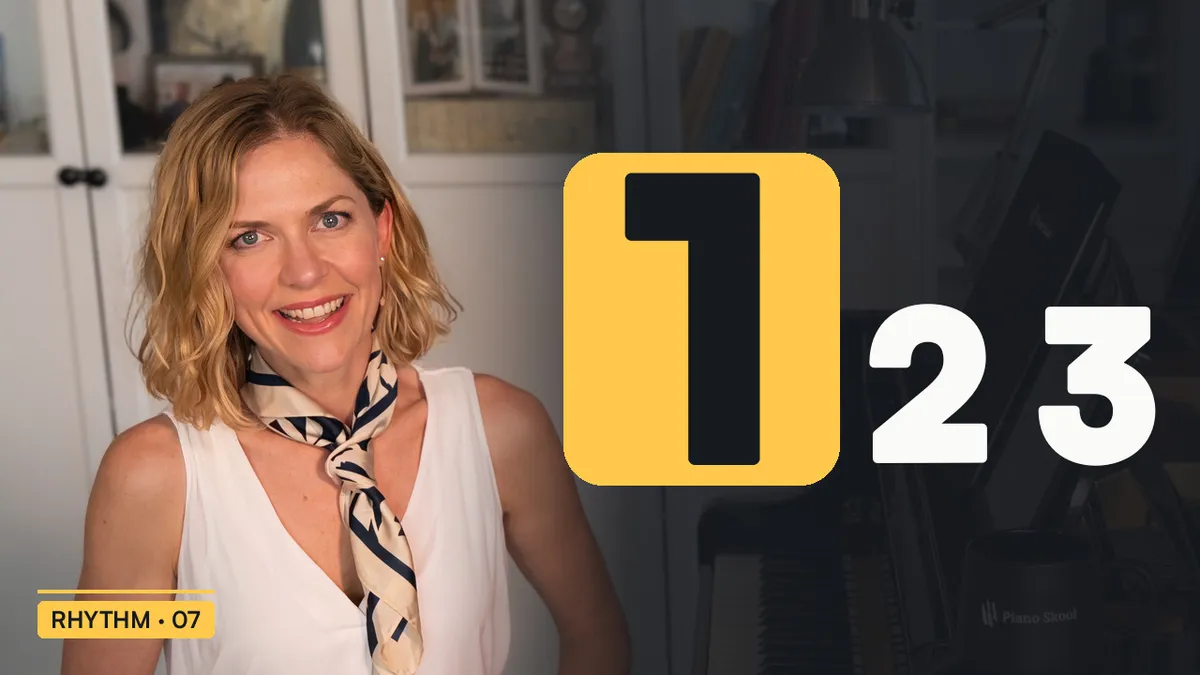
The 3/4 Time Signature Explained: How a Waltz Actually Feels
Lesson 7 of 21 in the free Rhythm for Adult Piano Beginners series. Prefer to watch in order? Open the full playlist on YouTube.
3/4 looks like 4/4 with a beat missing, and it does not work like that. The 3/4 time signature is why a waltz feels like it is turning instead of marching, and in this lesson I cover what the three and the four each tell you, where the emphasis falls, a short and slightly scandalous history, and the one thing I do before I play a single note in three: the count-in that keeps your tempo from collapsing before you even start.
Three is the first time signature most adults meet that is not four. Learn to feel it and the next several lessons get much easier.
The problem: counting a waltz in four
If every piece you have ever played was in 4/4, your body has a default. It expects a fourth beat. Put a waltz in front of it and one of two things happens: you add a beat that is not there and the bar line arrives late, or you play the three beats evenly with no emphasis and the waltz sounds flat, like a march that lost weight.
The other problem is the start. Most adults sit down, look at the first bar, and play. There is no tempo established, no feel established, and the first two bars are a negotiation between what the hands want and what the piece needs. By bar three the tempo has drifted, and a runaway train never ends well.
Both problems have the same cure: feel the three before you play it, and give beat one a little more weight than two and three.
How I teach it: what three feels like, and how to start in it
What 3/4 actually means
The 3/4 time signature means there are three beats per measure and the quarter note gets one beat. That is the whole instruction. But it feels different from 4/4, which is steady and balanced. Three has a flowing, circular quality, with a natural emphasis on the first beat of every measure: ONE two three, ONE two three. That emphasis is not written anywhere. It is the feel of the meter, and it is what makes a waltz turn.
Why it is called waltz time
Waltzes are traditionally written in 3/4, which is why you will hear it called waltz time. The waltz itself started in the sixteenth century in parts of Germany and Austria, and by the nineteenth century it was wildly popular across Europe, especially in Vienna. When it first caught on it was considered scandalous, because it involved close physical contact between partners, which was unconventional at the time. Some critics worried it might lead to public displays of holding hands. The waltz began as dance music, but composers like Chopin went on to write waltzes meant to be listened to rather than danced to.
Count yourself in before you play
Here is the thing I do every single time I play in three. Before the first note, I count two full bars out loud: one two three, one two three. That does two jobs at once. It puts the feel of three into my body before my hands have to produce it, and it establishes the tempo I am going to take, so the first bar is the same speed as the tenth. Skipping the count-in is the single most common reason a waltz falls apart in the first line. Do it out loud, and do it every time until it is automatic.
Put those together and the 3/4 time signature stops being four minus one. It becomes its own thing: a count-in, a weighted first beat, and two lighter beats that carry you back around to one.
Try this today: make three feel like three
The count-in habit. Set a metronome to 72. Say one two three, one two three out loud, then clap the next two bars of quarter notes still counting. Every time you start anything in three this week, count two bars in first. No exceptions, even for a four-bar exercise.
Weight the one. Clap three beats per bar, making beat one louder and beats two and three softer. Then swap: make two the loud one. Notice how wrong it feels. Then put the weight back on one. You have just learned what a downbeat is by doing it wrong on purpose.
Subdivide in three. Count one and two and three and, then one e and a two e and a three e and a, still with the weight on one. Finish with the clap-along in the video, then the Rhythm 104 worksheet: counting under the notes, answers checked on the back.
What 100 days of this looks like
Here is the arc I usually see when an adult does this every day. Your pace will be your own.
In the first week, the count-in feels like a ritual and the fourth beat keeps trying to sneak back in. By week two the body has a second default. You hear three in a song on the radio before you have counted it, and that is the first sign the meter has moved from your head into your ear.
By the second month, your waltzes have a downbeat. People listening can tell it is a waltz without being told, which is the entire job of the time signature. Around day 100, you count yourself in without deciding to, in three and in four, and the first bar of every piece you play is at the tempo you intended. That one habit will save you more wrong notes than any finger exercise.
Questions adults ask about this lesson
What does 3/4 time mean?
Three beats in every measure, and the quarter note gets one beat. It is counted one two three, with a natural emphasis on beat one, which gives it a flowing, circular feel.
Why is 3/4 called waltz time?
Because waltzes are traditionally written in 3/4. The weighted first beat and two lighter beats are what make a waltz feel like it is turning.
How do you count yourself in before playing?
Count two full bars out loud at the tempo you intend to play: one two three, one two three. It puts the feel of the meter in your body and sets the tempo before your hands have to produce it.
What is the difference between 3/4 and 4/4?
4/4 has four beats per measure and feels steady and balanced. 3/4 has three beats per measure and feels circular, with the emphasis landing on one every three beats instead of every four.
Work with Stacey
You can learn a lot of this on your own. What you cannot do on your own is hear what your playing sounds like to a teacher, or know which of the twenty small things you could fix is the one that matters this week.
That is what a consultation is for. We talk about where you are, what you want to be able to play, and whether working together one on one makes sense. It is a conversation, not a pitch, and it is free.
Book a free consultation with StaceyIf you would rather start with a plan than with theory, my free 7-Day Piano Kickstart walks you through three real songs, both hands together, over seven days.
Piano Skool is online piano education for adults (18+). Educational purposes only; results vary with practice and consistency. Nothing here is a promise about how fast you will progress.
Previous lesson: Time Signatures Explained: 4/4, Ties and the Dotted Quarter Note. Start from the beginning: What Is Rhythm in Music? Piano Basics for Adult Beginners. Next lesson: How to Count Rests in Music: Eighth and Sixteenth Rests. Follow the playlist so you do not miss it.


